

Panel discussion “The Future Convention on Prevention and Punishment of Crimes against Humanity and its Relevance for Southeast Asia”
December 3 @ 5:30 pm - 7:30 pm
Background
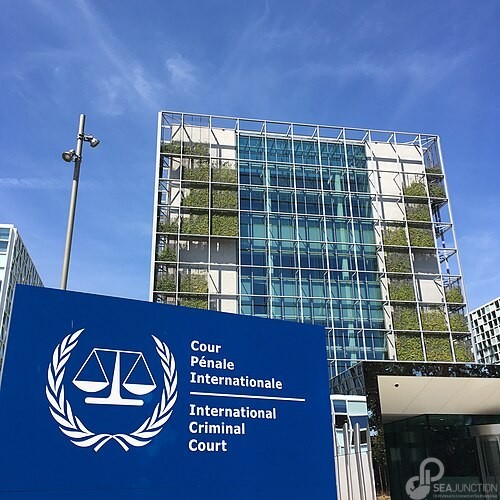
Asia, including Southeast Asia, has historically witnessed and continues to experience conflicts and atrocity crimes, including crimes against humanity – crimes that are widespread or systematic attacks directed against civilian populations. Historical experiences include Indonesia, Cambodia and Timor-Leste. The International Criminal Court (ICC) has some jurisdiction, with the arrest and transfer of former Philippine President Duterte to the ICC, where his trial for his role in the ‘war on drugs’ campaign and committing crimes against humanity of murder is slated to start on November 30, a case in point. In addition, an ICC warrant for arrest was made public in May for former Philippine national police chief and current Senator Ronald ‘Bato’ dela Rosa, who has so far escaped custody.
In November 2024, ICC prosecutors sought an arrest warrant for former Senior General Min Aung Hlaing and other unnamed officials in Myanmar for the crimes against humanity of deportation and persecution against the Rohingya. A public outcome on the application is still pending. Furthermore, in a case filed in 2019, the International Court of Justice (ICJ) in The Hague on 19 November ruled that Myanmar has committed the crime of genocide against the Rohingya people in connection with the military’s 2017 operations in Rakhine State.
However, the ICC and the ICJ can only act within the limits of their jurisdiction and can practically only process a small number of cases. Therefore, it is crucial to strengthen domestic legal systems. There are dedicated international treaties on genocide, apartheid, torture, enforced disappearance, and war crimes in international humanitarian law. However, there is no convention that exclusively and comprehensively addresses crimes against humanity. This gap in international law is now going to be closed.
In December 2024, the United Nations General Assembly decided in resolution 79/122 to convene a diplomatic conference on a legally binding instrument for the prevention and punishment of crimes against humanity, on the basis of Draft Articles submitted by the International Law Commission. The first Preparatory Committee for the conference met in January 2027, the second meeting is scheduled for April 2027. The Diplomatic Conference is to follow in 2028 and 2029, to negotiate and adopt the new convention. All meetings are presently planned to be held in New York (see further below for timeline).
Resolution 79/122 also invited states to submit written proposals for amendments to the Draft Articles. Approximately 65 states and the EU took advantage of this opportunity. Engagement from Asian States was limited, with submissions only from Afghanistan, China, Japan, Nepal, South Korea; from the ASEAN membership, only Singapore and Timor-Leste participated with proposals. Previously, Indonesia, Malaysia, Thailand, the Philippines and the UN representation of Myanmar had expressed support for various aspects of the planned convention. Viet Nam is isolated in the region with its only public opposition to this project.
Furthermore, Resolution 79/122 “encourages participants in the Conference to organize consultations on issues of substance, prior to the convening of the Conference”. It is to this point that Amnesty International and SEA Junction have organized the present panel discussion for civil society, diplomats and the broader interested public, in partnership with Asia Justice Coalition (AJC) and the International Commission of Jurists (ICJ).
The panel discussion to be held at SEA Junction on 3 December at 5.30 PM aims to explore the potential of a new pathway to accountability for crimes against humanity globally and regionally; to inform about and raise awareness of the ongoing discussions on a future Convention on Crimes against Humanity; and to discuss civil society opportunities for engagement and proposals for the future Convention.
The panel discussion will provide an opportunity to reflect on the relevance and potential of the Crimes against Humanity Convention for Southeast Asia. Among others, it will provide a space for questions, such as to explain and clarify the relationship between the future convention and the Rome Statute of the International Criminal Court and other international treaties, and to enable an exchange of views on, for example, national jurisdiction, proposed new crimes, gender justice, and enforcement mechanisms in the context of the region.
Panel Moderator and Speakers
Moderator: Rosalia Sciortino, Founder and Director, SEA Junction
Speakers:
- Jan Erik Wetzel, Senior Policy Advisor, Amnesty International ESEAPRO
- Sanhawan (Kay) Srisod, Senior Legal Adviser, ICJ, Asia-Pacific Office
- Debbie Stothard, Founder/Coordinator, Alternative ASEAN Network on Burma (ALTSEAN Burma)
- Tbc
Moderator and Speakers’ Bios
Dr. Rosalia (Lia) Sciortino Sumaryono, is Associate Professor at the Institute for Population and Social Research (IPSR), Mahidol University and Founder and Director of SEA Junction. Previously she was Regional Director for Asia for IDRC and The Rockefeller Foundation. see further www.rosaliasciortino.com.
Jan Erik Wetzel is a Senior Policy Adviser in Amnesty International’s East and Southeast Asia and Pacific Regional Office in Bangkok. He coordinates Amnesty’s global campaigning for a treaty on crimes against humanity.
Sanhawan Srisod is a Senior Legal Adviser with the International Commission of Jurists (ICJ) in Bangkok. She leads the ICJ’s work on accountability for torture, enforced disappearance, and other serious human rights violations in Thailand.
Debbie Stothard is the founder and coordinator of Alternative Asean Network on Burma (ALTSEAN-Burma), an NGO campaigning for human rights and democracy in the ASEAN region. She has participated in democracy building in Burma and other ASEAN countries since 1987.
Resources
- ILC’s 2019 Draft Articles on Crimes against Humanity and commentaries, available here.
- UN General Assembly Resolution 79/122 on United Nations Conference of Plenipotentiaries on Prevention and Punishment of Crimes against Humanity, 12 December 2024, available here.
- First Preparatory Committee Final Recommendation by the coordinator on the CSOs, available here.
- Statements delivered by States and civil society organisations at the first session of the Preparatory Committee, available here.
- 2026 proposals by Governments for amendments to the draft articles (individual and compiled) available here
Timeline for the Convention
- December 2022: Adoption of the resolution 77/249 entitled “Crimes against humanity” (A/C.6/77/L.4)
- April 2023 and April 2024: Resumed Sessions, Sixth Committee, UNGA
- December 2024: Adoption of resolution 79/122 entitled “United Nations Conference of Plenipotentiaries on Prevention and Punishment of Crimes against Humanity” (A/RES/79/122)
- 19 – 30 January 2026: First session of the Preparatory Committee
- 30 April 2026: Deadline for governments to submit to the UN Secretary-General written proposals for amendments to the ILC Draft Articles (published in June)
- 12 – 15 April 2027: Second Session of the Preparatory Committee
- 2028–2029: UN Diplomatic Conference on the Prevention and Punishment of Crimes Against Humanity
For more information, please email: info@seajunction.org or phone/wa: +66970024140
NB: The event is free, donations are welcome to support SEA Junction activities.
Organizers
Amnesty International is global movement that campaigns to end grave abuses of human rights. Its vision is a world where those in power respect international law and are held to account. Amnesty is independent of any government, political ideology, economic interest or religion and is funded mainly by membership and individual donations. In Bangkok, Amnesty International has two offices: Amnesty International Thailand and the East and Southeast Asia and Pacific Regional Office of the International Secretariat.
SEA Junction, established under the Thai non-profit organization Foundation for Southeast Asia Studies (ForSEA), aims to foster understanding and appreciation of Southeast Asia in all its socio-cultural dimensions, from arts and lifestyles to economy and development. Conveniently located at Room 407-8 of the Bangkok Arts and Culture Center or BACC (across MBK, BTS National Stadium), SEA Junction facilitates public access to knowledge resources and exchanges among students, practitioners and Southeast Asia lovers. More information at http://seajunction.org/.