


Article originally written by Rosalia Sciortino on The Irrawaddy-English Edition of 18 May 2026.
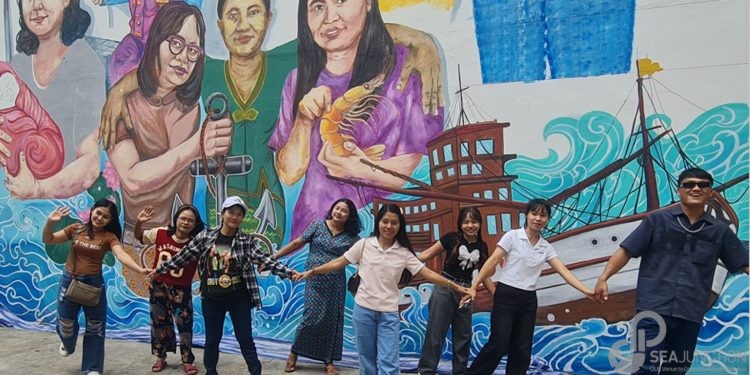
Samut Sakhon migrants visit the mural featuring them on 17 May 2026/ Rosalia Sciortino
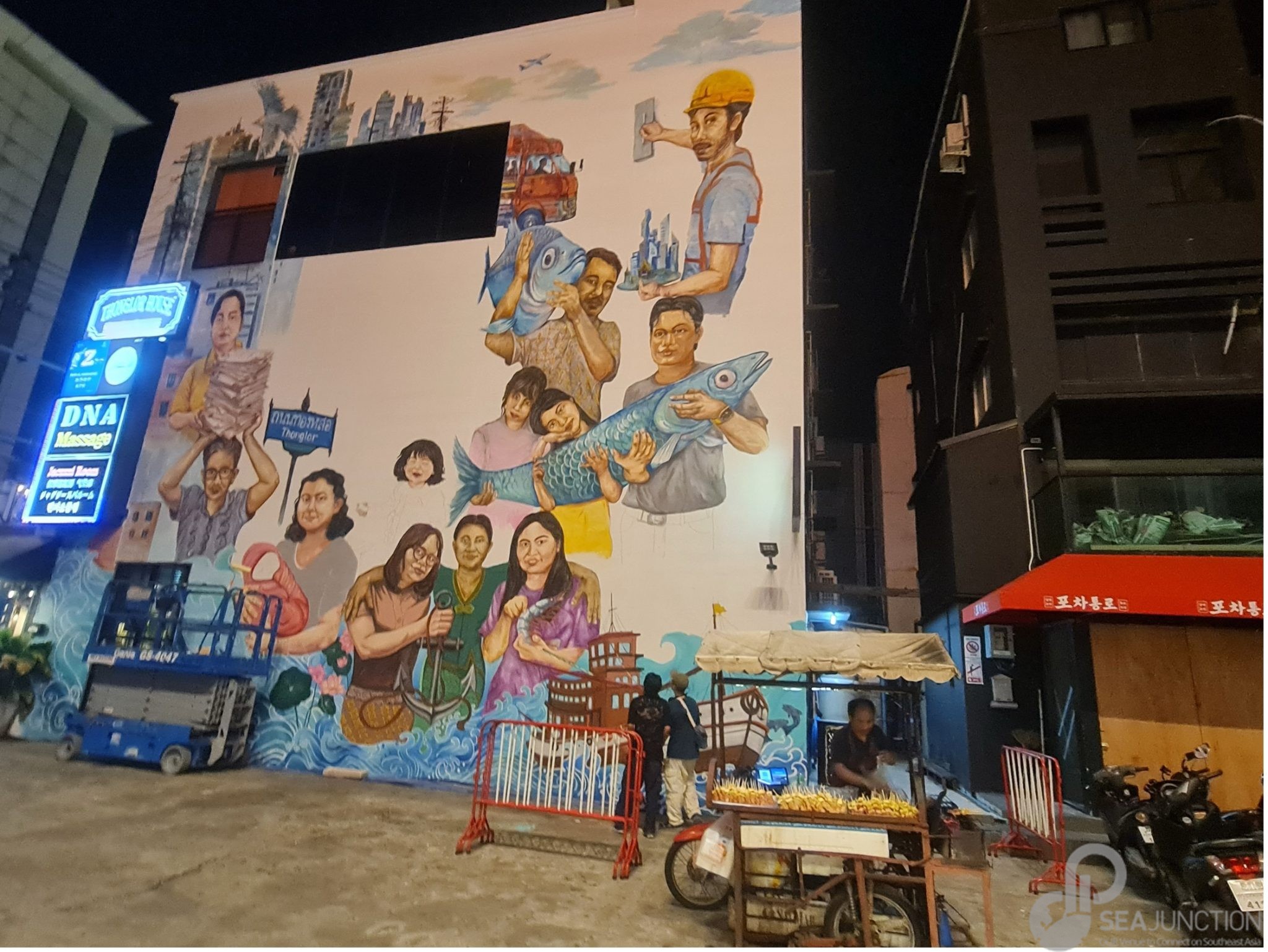
Sometimes bold ideas appear crazy at first—and that was exactly my reaction when Chuu Wai, a well-known artist from Myanmar now based in Paris, called me with the unexpected proposal to collaborate on a mural in Bangkok. SEA Junction had worked with Chuu Wai on three exhibitions in Bangkok and Chiang Mai in 2024 and appreciated her artistic vision. But a mural was unchartered territory. We had never ventured into something quite so ambitious. The scale of the wall alone, with a height of 10 m and a width of 12 m, was daunting.
The mural would depict people from Myanmar and Cambodia living and working in Thailand, celebrating their belonging in Thai society while affirming that Thai and migrant people are neighbors bound by shared labor, culture and daily life experiences, reminding us to care for one another across difference. It was a hopeful message, transforming narratives of division into messages of interdependence and peace—a vision SEA Junction wholeheartedly embraced.
Together We Build in progress / Rosalia Sciortino
As one of Southeast Asia’s major migration hubs, drawing labor primarily from Cambodia, Laos and especially, Myanmar, migration is woven into Thailand’s social fabric. Migrants fill labor gaps across all major economic sectors, particularly in labor-intensive industries such as agriculture, fisheries, construction and retail. Their role in sustaining local communities and regional economies is only expected to grow, driven by demographic change in Thailand and persistent economic and political instability in the region. Yet the voices of those who have left their homelands in search of better livelihoods or safety from conflict often go unheard, and their experiences remain largely invisible.
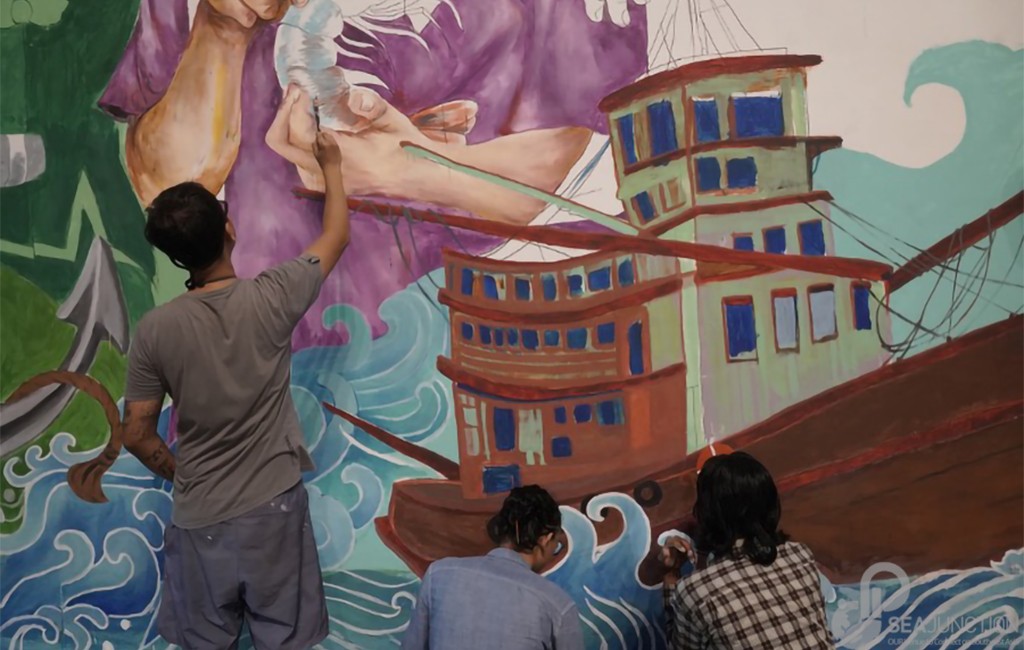
The collective painting process / Thaw Zin Paing
By exposing their narratives in a public space, the mural would affirm their resilience, dignity and indispensable role in shaping societies. Placing it in Thonglor, one of Bangkok’s most dynamic and affluent mixed-use neighborhoods, would give the statement even greater weight. The wall, on the corner of a dead-end street between sois 9 and 11 and clearly visible from the main road, was generously made available for two years by Thonglor House bar. This ensures that the message will have time to sink in, seen daily by the many who walk or drive past, especially when stuck in rush-hour traffic on this major thoroughfare.
After some reflection, we decided we were keen to try new, more creative and emotive ways to advocate for migrants’ dignity, even if it meant moving out of our comfort zone of panel discussions, research, exhibitions and film screenings. The inclusive tone of the project was equally enticing, drawing us into the process alongside artists and migrants themselves. The design emerged though four workshops bringing together artists and people with an interest in migration, both Thai and non-Thai, with Cambodian migrants working in diverse occupations in Bangkok and Myanmar migrants working in the seafood industry in Samut Sakhon.
Three principal themes emerged. The migrants’ most common wish was that the public should feel with them—to learn about their lives and families, recognize their hard work, appreciate their pride in the tasks they perform, and acknowledge their effort to belong. They also spoke of solidarity among themselves and with Thai workers alike, and how caring for one another helped them through shared challenges. Finally, they expressed hope that regularization of their status could be streamlined, making it easier for them to work legally.
At time of publication, the mural is in its final stage. Now titled Together We Build, it has taken shape through a collective process, painted by volunteers of diverse nationalities under the artistic direction of Chuu Wai and her co-artists Sai Chit Min and Khant Win. Together they have sought to visualize the migrants’ aspirations allegorically while keeping their figures and gestures true to life. For each strand, one or more migrants have been depicted in poses drawn from their own narratives. Passers-by may not catch every layer of meaning, but they will not miss the migrants on the wall, present in our midst.
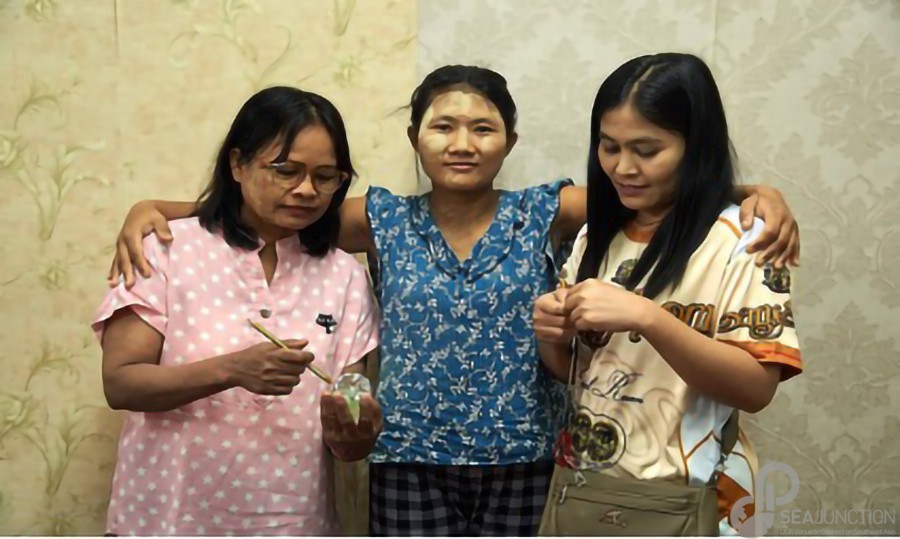
Photo of migrants in Samut Sakhon / Sayan Chuenudomsavad
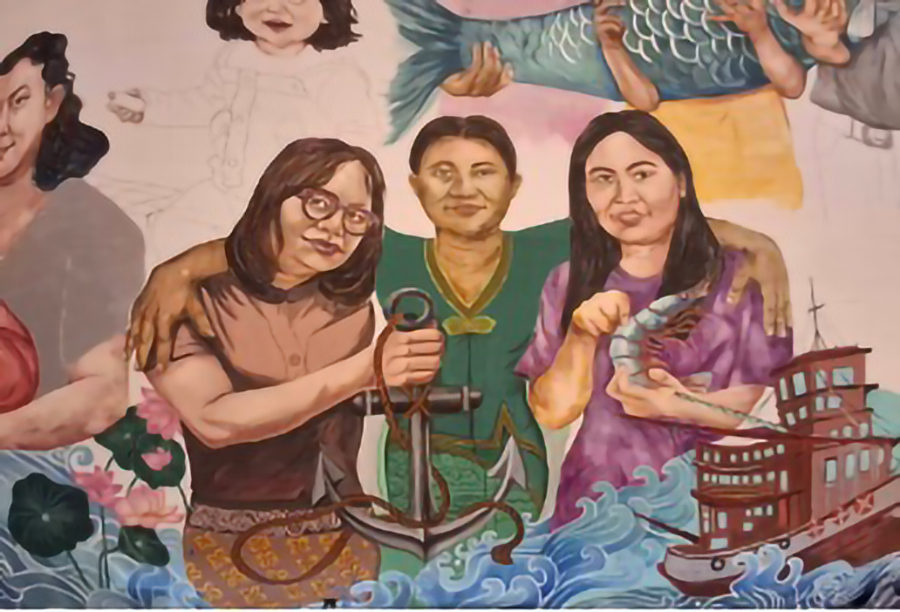
and transformed in the mural / Rosalia Sciortino
The writer is executive director of SEA Junction, Bangkok and former regional director for Asia with the Rockefeller Foundation and the International Development Research Center.
The Together We Build mural is a SEA Junction project in partnership with Ship to Shore Rights South East Asia of the International Labour Organization (ILO), funded by the European Union.